
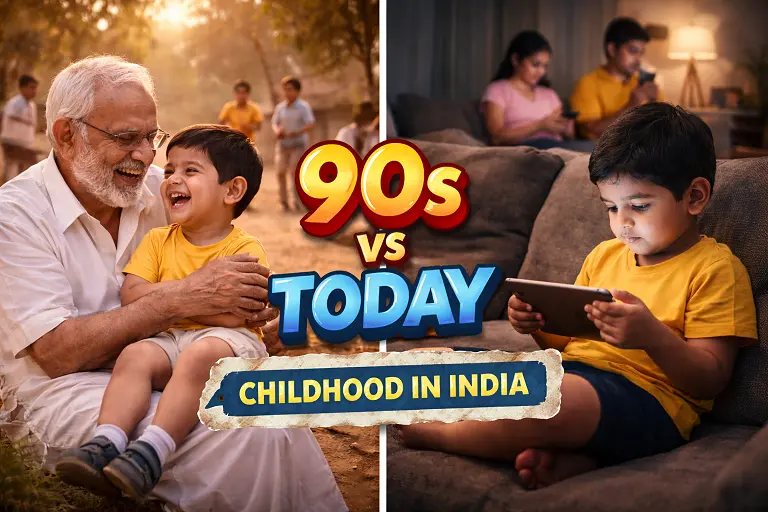
A glance at 90s childhood memories
India’s family culture has undergone a structural shift in the last two decades. From joint-family ecosystems to urban nuclear lifestyles, childhood itself has changed – not just in activities, but in emotional exposure, independence, and social conditioning.
Let’s analyze this transformation through the lens of a child’s daily life, where 90s childhood memories are lost.
Family Structure: Joint vs Nuclear
90s Era:
A typical Indian child in the 90s grew up in a joint family system. Grandparents, uncles, aunts, and cousins lived under one roof. According to sociological trends from that period, joint families were still dominant in semi-urban and rural India. Children developed strong intergenerational bonds and learned values through constant interaction.
Today’s Era:
Modern India has largely transitioned to nuclear families, especially in urban areas. A child’s primary interaction is limited to parents. With migration for jobs and urban establishment, the joint family presence has significantly reduced.
Insight:
The shift has led to reduced emotional change in a child’s environment and hence, 90s childhood memories are lost here.
Sleeping Patterns: Stories vs Screens
90s Era:
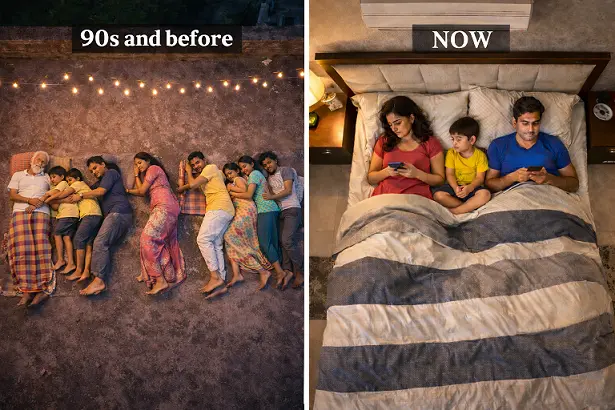
Children often slept beside grandparents, especially grandmothers. Bedtime was not just about sleep; it was a ritual filled with folk tales, mythological stories, and life lessons. These stories played a role in shaping imagination and moral grounding and are an important part of 90s childhood memories.
Today’s Era:
Children usually sleep with parents, but storytelling has been replaced by screen exposure – YouTube, cartoons, or mobile games. Bedtime is often silent or digitally occupied.
Insight:
The cognitive input has shifted from storytelling culture to passive digital consumption.
Playtime: Togetherness vs Isolation
90s and Before:
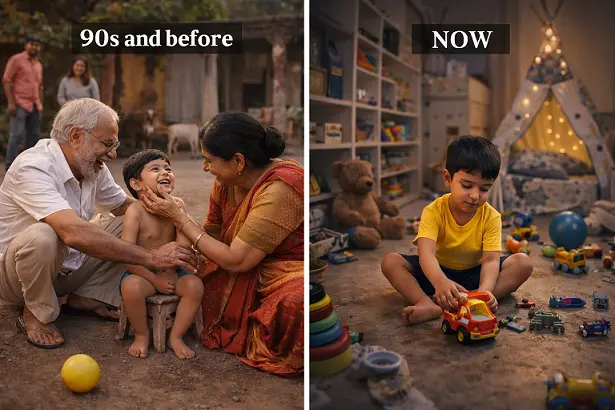
Playtime meant people, not toys. Grandparents were part of the fun – laughing, teasing, and playing with kids in open spaces. A child was rarely alone, always surrounded by love and attention, which is one of the best 90s childhood memories.
Now:
Playtime has become solo and indoor. Kids sit in packed rooms with toys, but with little human interaction. Parents are busy, and play often happens in silence.
Food Habits: Traditional vs Convenience
90s Era:
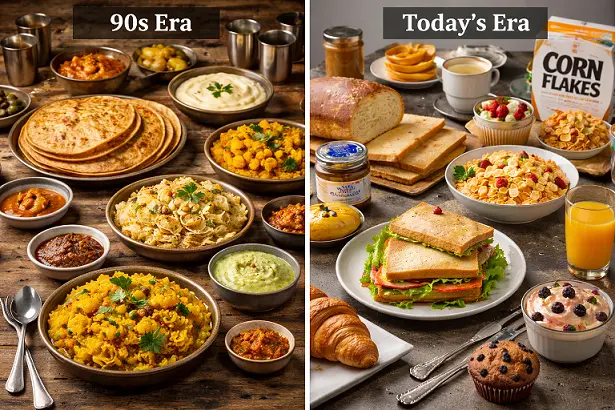
Breakfast and meals were typically homemade and traditional – parathas, curd, poha, upma, or idlis. Meals were heavy, nutritious, and often prepared fresh daily. We still remember this traditional food as part of our 90s childhood memories.
Today’s Era:
Food habits have shifted towards quick, convenient options – bread, sandwiches, pasta, packaged cereals, or ready-to-eat items. Time constraints and lifestyle changes have influenced this shift.
Insight:
There is a clear move from nutritional depth to convenience-driven eating patterns.
School Commute: Independence vs Comfort
90s Era:
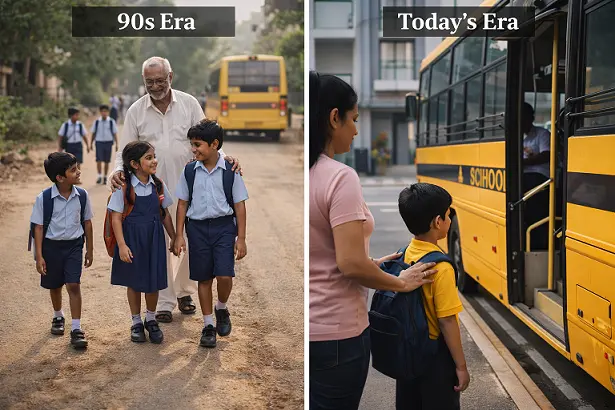
Children often walked to the bus stop or school, accompanied by grandparents or friends. This built independence, social interaction, and resilience.
Today’s Era:
School buses often pick children directly from their doorstep, or parents personally drop them. Safety concerns and convenience are issues now.
Insight:
While safety has improved, independent mobility and early-life responsibility have reduced.
Lunch Experience: Social Eating vs Solitary Eating
90s Era:
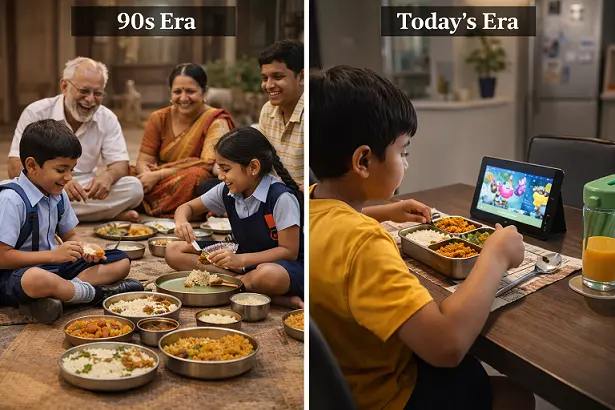
Lunch was a family activity. Children often ate with grandparents, cousins, and other joint family members, enhancing communication and bonding.
Today’s Era:
With both parents working, children often eat alone or with less company. In some cases, meals are eaten alongside screens.
Insight:
Shift from community-based living to individualistic routines.
Playtime: Outdoor Freedom vs Indoor Isolation
90s Era:
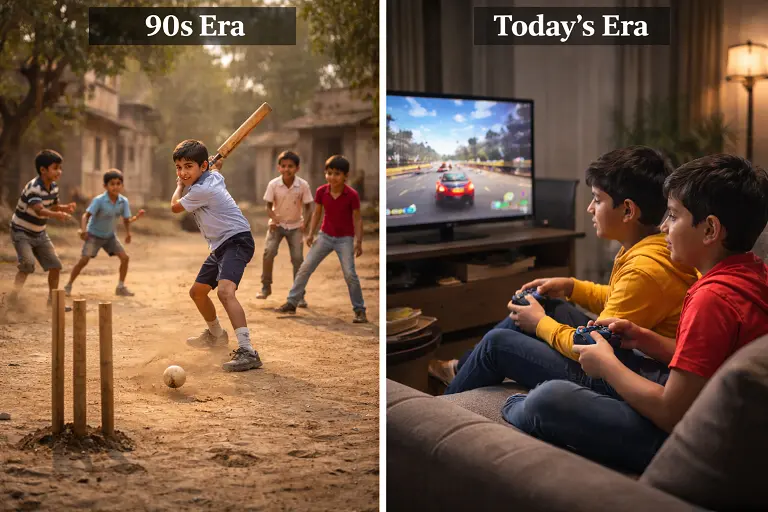
Evenings were filled with outdoor games like cricket, gilli-danda, hide-and-seek, and kho-kho. Streets and playgrounds were full of children.
Today’s Era:
Playtime has moved indoors, mobile games, video games, and OTT content dominate. Outdoor play has reduced significantly due to safety concerns, academic pressure, and a lack of open spaces.
Insight:
Physical play has been replaced by digital engagement, impacting both health and social skills.
Dinner Culture: Collective Ritual vs Scheduled Routine
90s Era:
Dinner was a family event, often involving multiple members sitting together. Women managed the kitchen collectively, and conversations flowed naturally.
Today’s Era:
Dinner is more structured and smaller in scale. With working parents and domestic help, the process is more organized but less communal.
Insight:
The ritualistic and emotional aspect of dining has decreased.
Emotional Bonding: Presence vs Distraction
90s and Before:
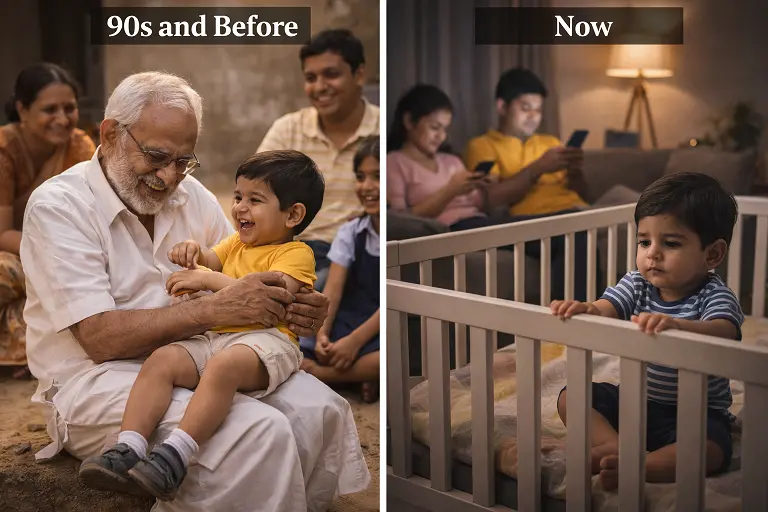
A child’s world revolved around people and presence. Sitting in a grandfather’s lap, laughing and playing, while the entire family watched with warmth, these were everyday moments. Love was expressed through time, touch, and togetherness.
Now:
A child may be surrounded by comfort, but often not by attention. Sitting alone in a cradle, looking at parents busy on their phones, the connection feels distant. Physical presence exists, but emotional presence is missing.
Insight:
Earlier, children were raised with attention.
Today, many are growing up around distraction.
Emotional Bonding: Storytelling vs Digital Distraction
90s Era:
Grandparents played a central role in a child’s emotional development through stories, conversations, and constant presence.
Today’s Era:
Parents are often occupied with work, laptops, phones, or household responsibilities. Children spend more time engaged with devices than with people.
Insight:
There is a shift from human interaction to screen interaction, affecting emotional intelligence and bonding.
Conclusion: Progress with a Trade-off
India’s transition from the 90s to today reflects economic growth, urbanization, and technological advancement. However, this progress comes with trade-offs:
- More convenience, less connection
- More safety, less independence
- More technology, less human interaction
The 90s were not perfect, and today is not inferior, but the nature of childhood has undeniably changed.
Final Thought:
The challenge is not to go back to the 90s, but to intentionally bring back its essence – family bonding, outdoor play, and storytelling into modern life.
Read this next: